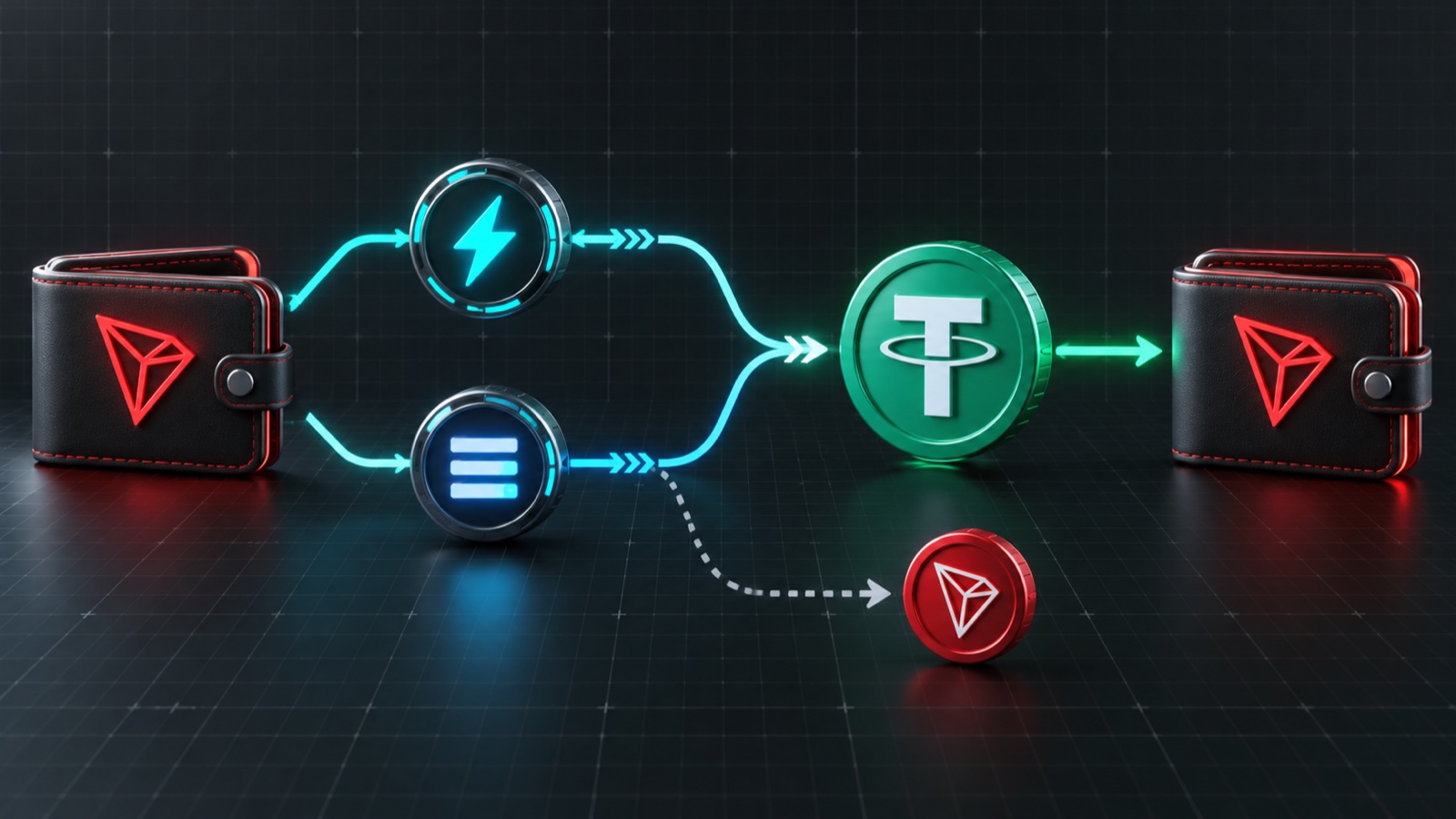
A USDT transfer uses two resources
Energy pays for smart-contract execution. Bandwidth pays for the bytes written on-chain. Renting Energy does not automatically rent Bandwidth, so both balances matter.
With enough Energy, the large contract-execution burn should be avoided, but a small Bandwidth burn can remain.
Where the approximate 1 TRX comes from
An activated account receives a free Bandwidth allowance over a rolling 24-hour window. Previous transfers or other operations may have consumed it. If free and staked Bandwidth are insufficient, TRX is burned for the missing bytes.
A wallet commonly reserves or displays about 1 TRX, approximately $0.10. The fiat equivalent is not fixed: it changes with transaction size, the current Bandwidth chain parameter and the TRX market price. It is not a second Energy purchase or an EZ Energy fee.
How to verify the charge
Open the transaction hash on Tronscan and inspect Energy Usage, Bandwidth Usage and Fee. A small Fee with Energy covered usually points to a Bandwidth shortfall. A larger charge requires checking Energy, fee limit and the execution receipt.
- Check the sender account resources.
- Use the confirmed receipt, not only a wallet estimate.
- Do not retry until the previous status is clear.
How to avoid the small extra fee
Wait for free Bandwidth to recover, keep a small TRX reserve, or obtain Bandwidth through staking or delegation. Higher-volume operations should budget Bandwidth separately.
Buying extra Energy does not replace Bandwidth. Check both resources immediately before sending.
FAQ
Is this another EZ Energy fee?
No. The wallet prompt relates to TRON network resources; the Energy order price is shown separately before payment.
Why was yesterday’s transfer free?
Bandwidth is consumed and recovers over a rolling 24-hour period, so availability can differ between transfers.
Can I send USDT with zero TRX?
Sometimes, if both Energy and Bandwidth are sufficient and the wallet supports it. Keeping a small TRX reserve is safer.
Sources
Technical facts are checked against official TRON documentation. Resource use can change with network and contract state.
Bandwidth and Energy ↗Paying for resources ↗