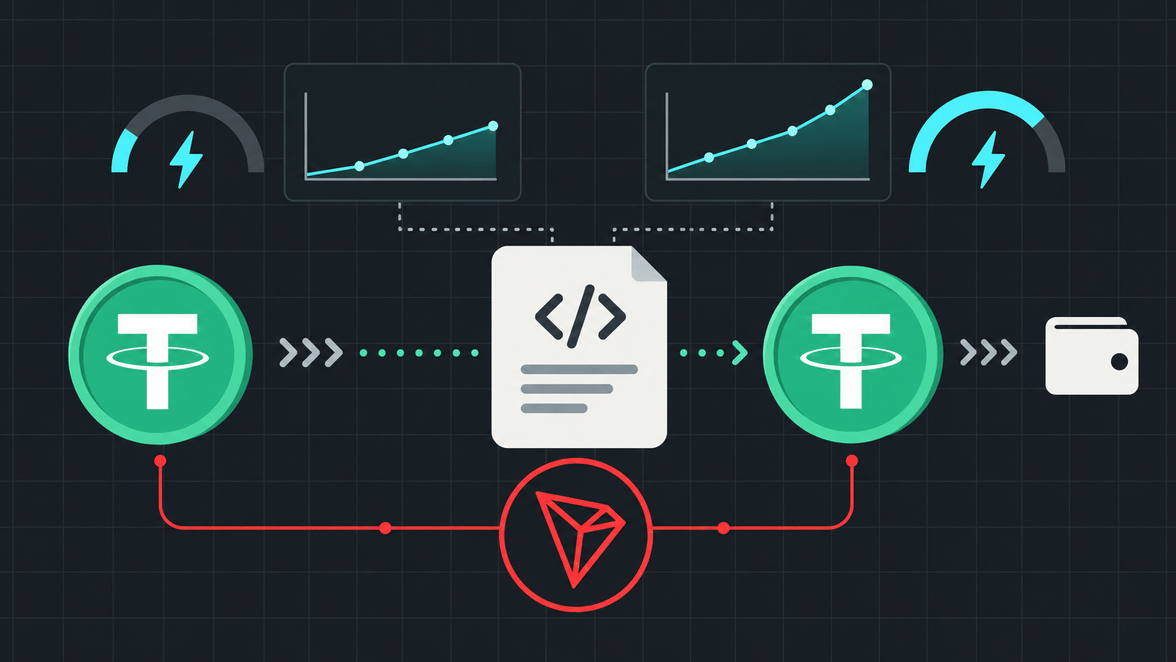
The network prices computation, not token value
Energy pays for smart-contract execution. Updating an existing non-zero USDT balance can use less computation than creating a new balance record. Sending more tokens does not normally increase Energy proportionally.
The energy factor can move
TRON may apply a dynamic factor to heavily used contracts. Yesterday’s receipt or a universal table is therefore not a guarantee. Bandwidth is accounted for separately.
- Check the recipient immediately before ordering.
- Use a fresh quote, not an article price.
- Keep a controlled margin for parameter changes.
A correct estimate is a live estimate
A useful calculator evaluates the actual address and shows the final rental price before confirmation. Verify the delegated resource on-chain, then inspect the transfer receipt and actual consumption.
FAQ
Why can similar transfers consume different Energy?
Recipient state, available resources and the contract’s current energy factor can differ.
Is the rental price permanently fixed on the page?
No. The payable total is confirmed in a live quote before the order.
Sources
Technical facts are checked against official TRON documentation. Resource use can change with network and contract state.
Energy consumption ↗Dynamic Energy Model ↗